In-Store Product Discovery
Helping Customers
Choose with Confidence
A research-led project using collaborative workshops to synthesise insights, prioritise opportunities, and ideate solutions.
A greenfield project for the retail apps team, where the current suite of apps were all colleague facing - this was an opportunity to develop something impactful for customers.
TEAM: Senior UX designer, UX researcher, Product manager, Engineering team, Data analyst, Retail tech representatives, Workshop participants.
The Challenge
Identify a customer problem, get alignment with stakeholders, plan it into the roadmap, deliver a well designed product that improves the in-store shopping experience.
Working with the UX researcher we chose to focus on 'customers that prefer not to speak to store colleagues', as they were underserved currently. (When a store colleague interacts with a customer we generally get a better CSAT score.)
My Role
This was a 0-1 project, I was the lead/solo designer on this project.
My work included:
•
Partnering with a UX researcher to create and conduct user interviews.
•
Facilitating workshops with senior stakeholders.
•
Prioritising workload of the project alongside other design responsibilities.
•
End-to-end design
Workshops
1. Jobs To Be Done
I facilitated a cross-functional JTBD workshop with product, research, and design to translate the research insights into clear, actionable job statements. This workshop created a shared understanding of user needs and problems - the output being a long list of statements.
2. Prioritise
Building on the JTBD outputs, I led a prioritisation session to align stakeholders on where to focus design and engineering effort. We evaluated opportunities against customer impact, business value, and technical feasibility, allowing the team to confidently narrow the problem space. This resulted in clear priority themes, as a customer…
•
I want to see product information so I can purchase a product that's right for me.
•
I want access to customer reviews, when I am looking at products, so I can find a level of reassurance in my product choice.
•
I want a way to get an out-of-stock product so I can start using it asap.
3. Ideate
I then ran a series of collaborative ideation workshops using Crazy 8s to rapidly explore solutions within the agreed focus areas. The session encouraged divergent thinking across disciplines while keeping ideas grounded in user needs and constraints. The strongest concepts from this workshop directly informed early wireframes and interactive prototypes, accelerating alignment and momentum into design execution.
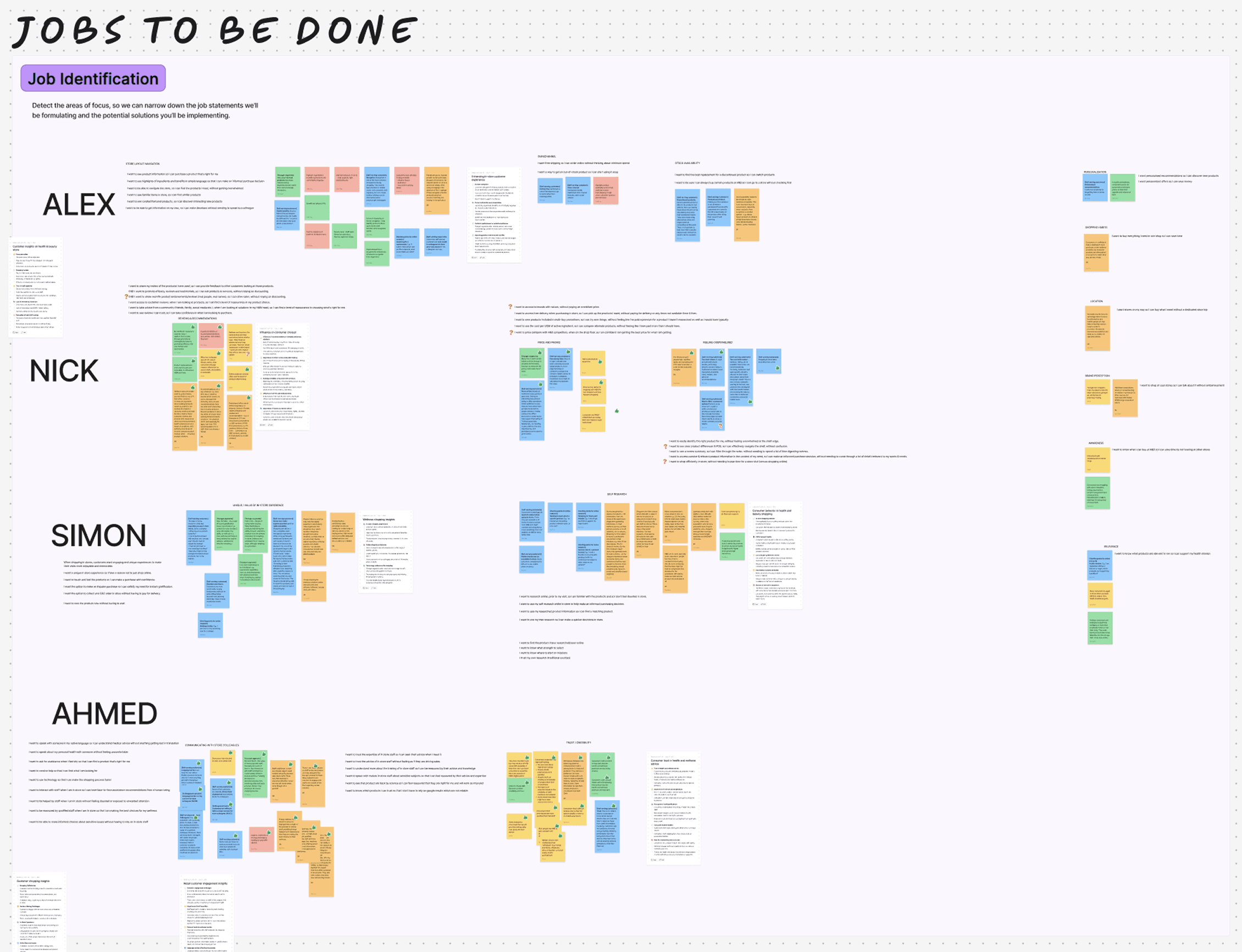
↑ 1. Affinity mapping research findings and creating JTBD statements
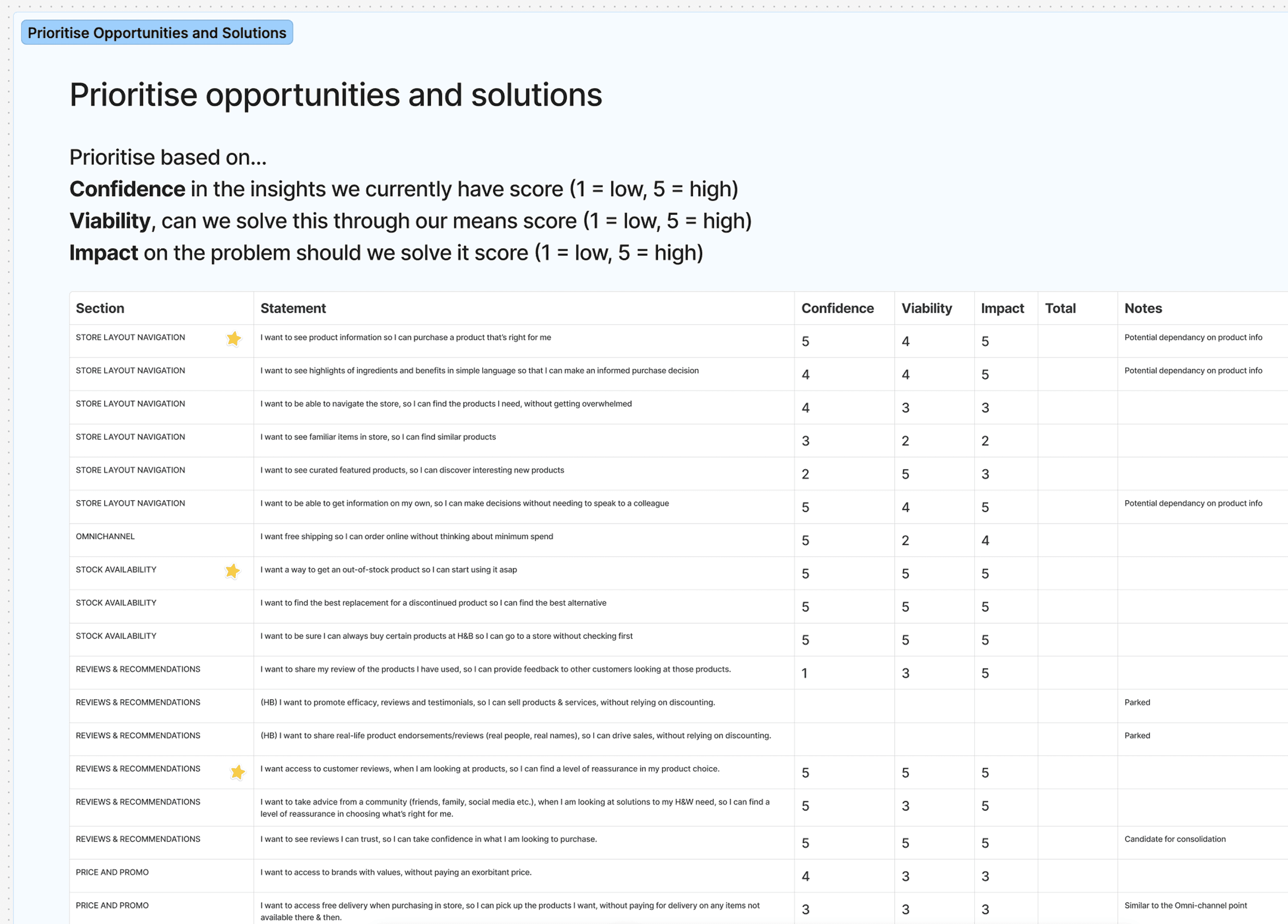
↑ 2. Worked with senior stakeholders to prioritise the JTBD statements
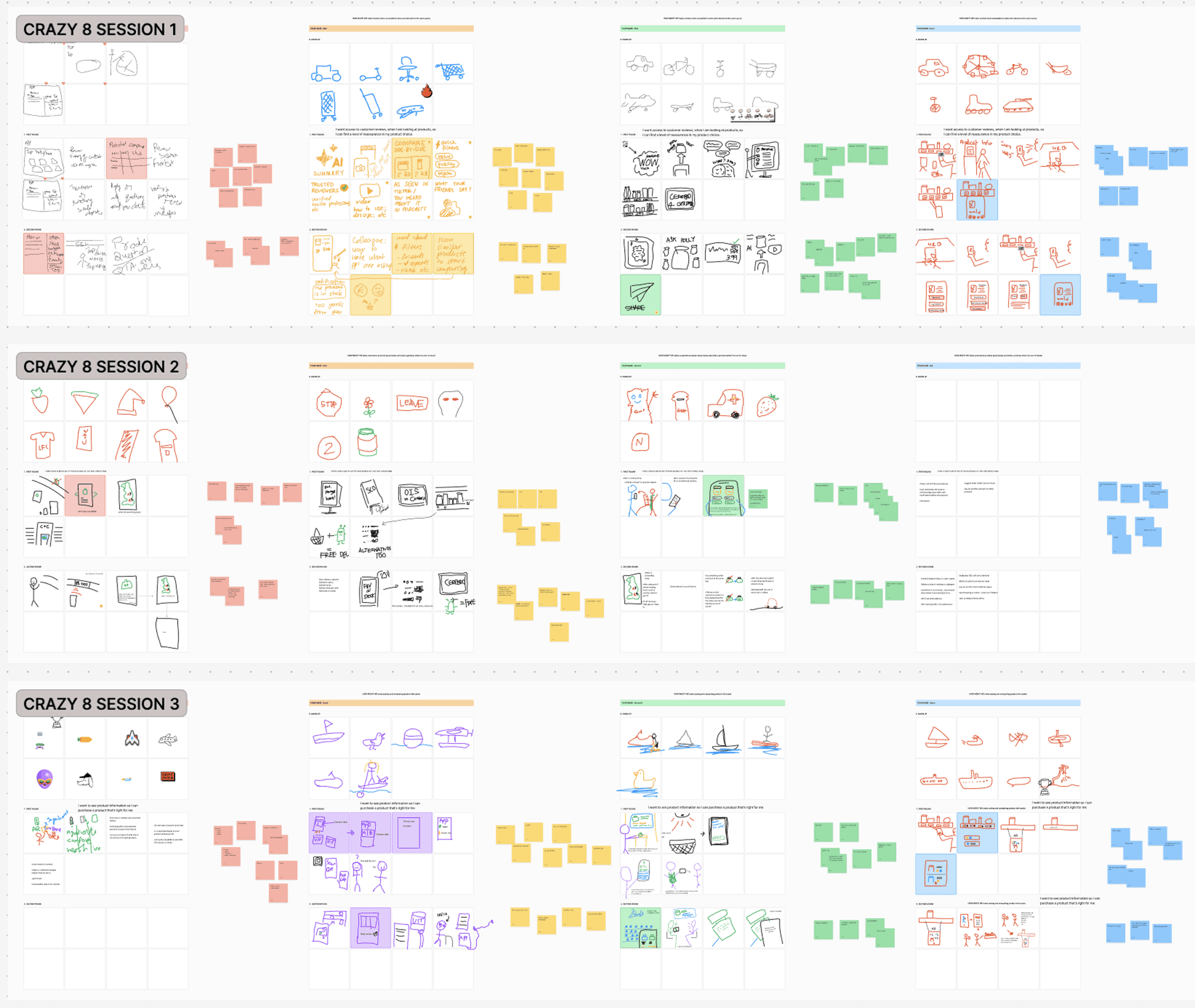
↑ 3. Ran a series of Crazy 8 sessions with everyone from the squad
Solution Highlights
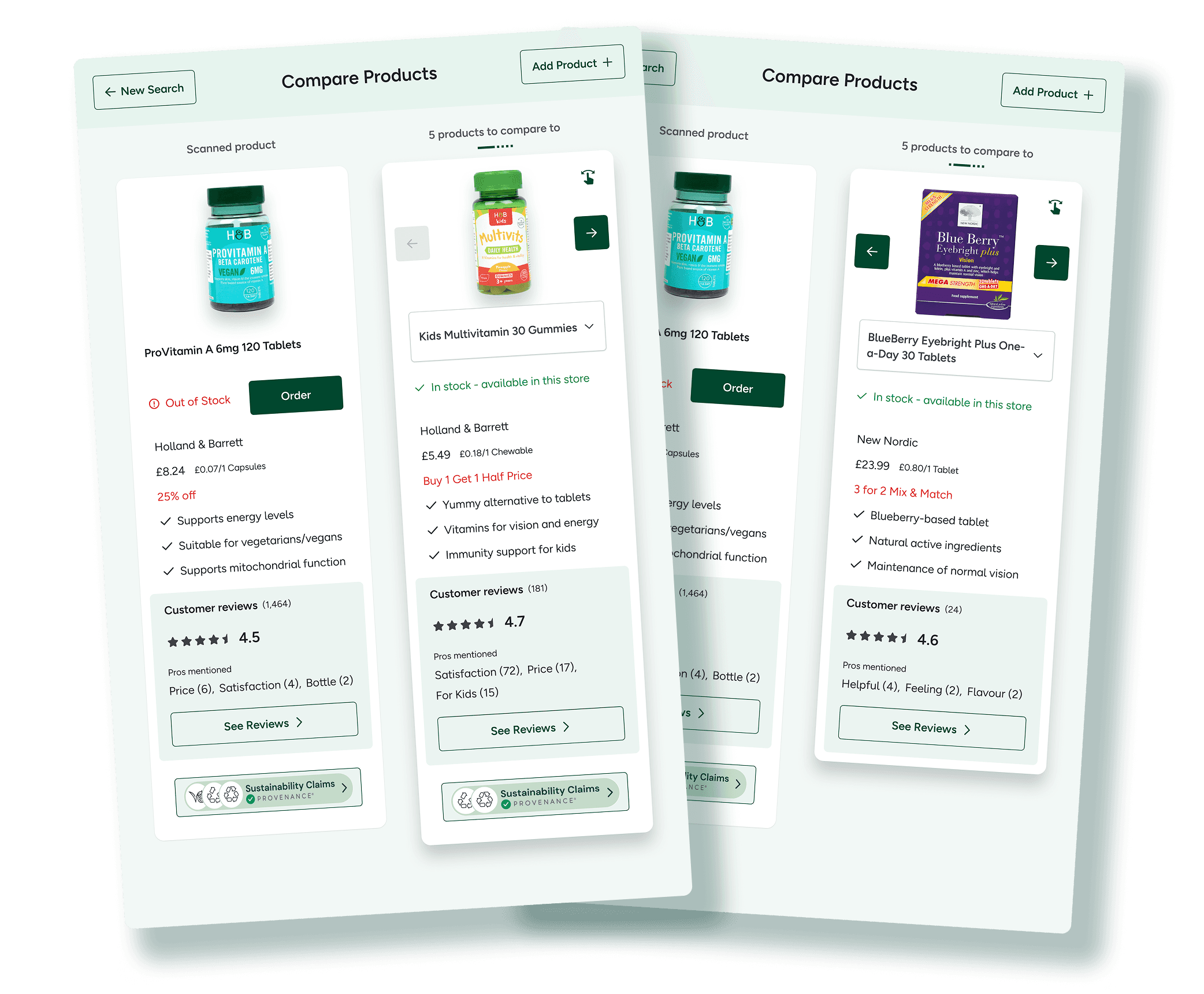
The final solution was a product comparison tool. The design was inspired by the team's input from the ideation workshop and the main features all relate back to the 3 outcomes of the prioritisation workshop.
Displayed key product information.
Gave the product review rating and an overview - detailed reviews were available by clicking.
When product was out-of-stock, it had the functionality to re-order it.
Outcomes & Learnings
I successfully delivered a project that met customer needs and aligned with business goals. The product was built by engineering and is currently waiting to be rolled out - it was not pushed live due to roadmap conflicts and the business side wanting to trial a different, but similar piece of tech in store.
Trialing a different piece of tech came down to the failure to prove ROI - I worked with the data & engineering team to be able to track usage of our product, but the tracking could not connect to the till. This meant we could not validate that someone using the comparison tool actually made a purchase - and thus no proof that any money was generated from having it in store.
Next Project →