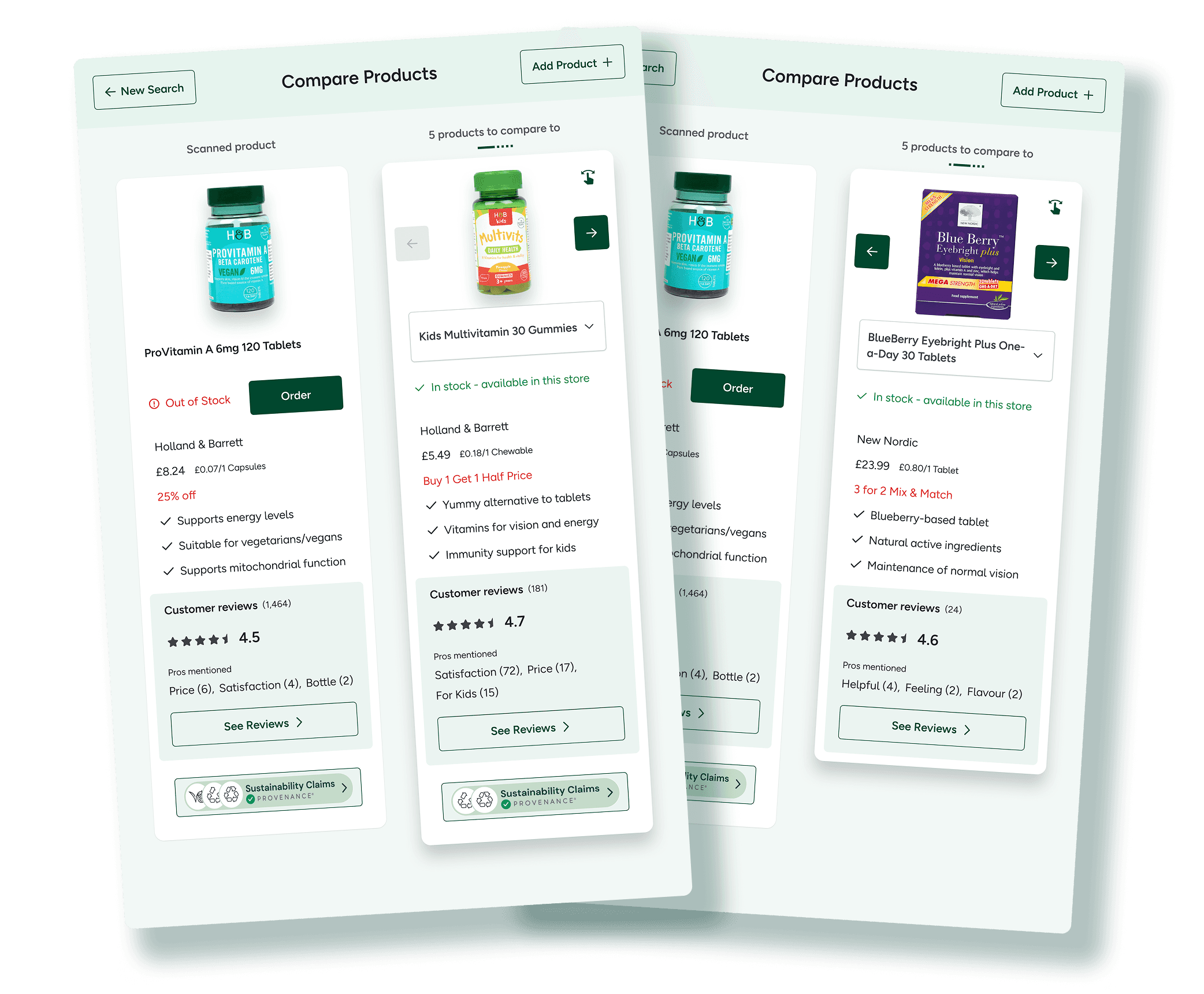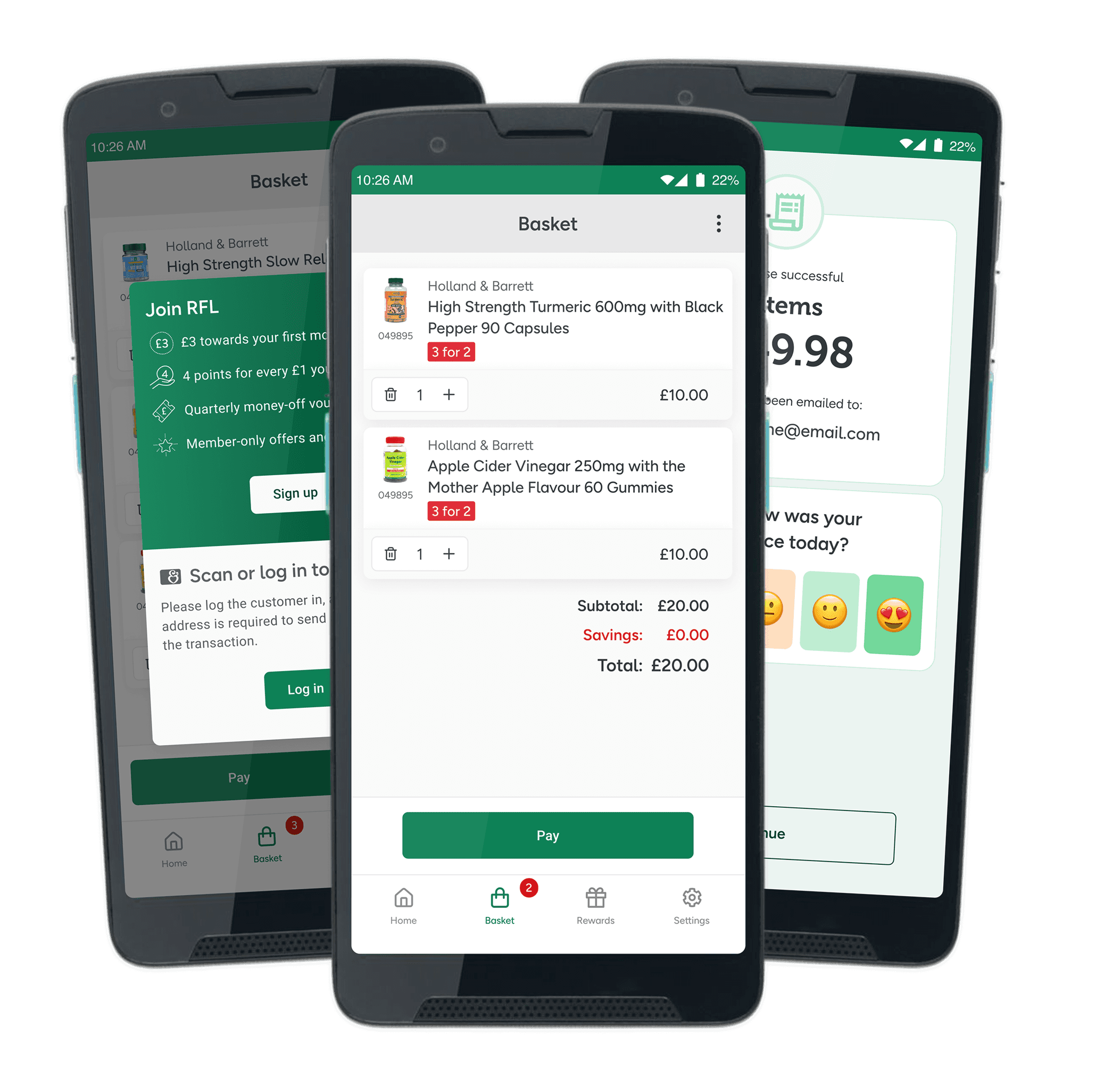
App Checkout Journey
Turning in-store advice moments into seamless mobile checkout experiences that drive higher value baskets.
Cerebro is a native app used by all Holland & Barrett in-store colleagues. It provides them with product and health condition info.
The app is a customer experience game changer - winning a Retail Week award in 2024 corporate.hollandandbarrett.com/news/6-03-2024/
TEAM: Senior UX designer, UX researcher, Product manager, Engineering team, Data analyst, Retail tech representatives.
The Challenge
Holland & Barrett colleagues are trained to give health advice to customers, they can use the Cerebro App to assist them on this journey - however to complete the sale, the colleague must direct the customer to pay at the tills.
An opportunity was identified to allow colleagues to complete the sale without having to send the customer to the till - so at the shelf-edge where the colleague was currently giving advice to the customer.
My Role
As the lead/solo designer, I own the end-to-end experience of this app - alongside a suite of native apps used by the in-store colleagues.
I had to:
•
Validate the feasibility of the customers experience if we joined the 'advice' journey to the 'checkout' journey.
•
Design the experience, everything from the information architecture and wireframes, to high fidelity prototypes.
•
Research - testing my prototype in-store with colleagues, getting feedback and iterating.
•
Prioritise workload of the project alongside other design responsibilities.
Design Process
Discover & Define
Working with UX researchers to confirm user needs, identify customer pain points and map journeys.
Utilising a 'super-user' group - certain store managers - to assist during the process. A consistent feedback loop to sound ideas out.
Ideate & Prototype
Working closely with product and engineering to ensure designs met stakeholder requirements whilst also being technically feasible.
Early prototype testing flagged the importance of showing the 'customer name' for the logged-in state, to the store colleague - without it e-receipts would be sent to the wrong customer.
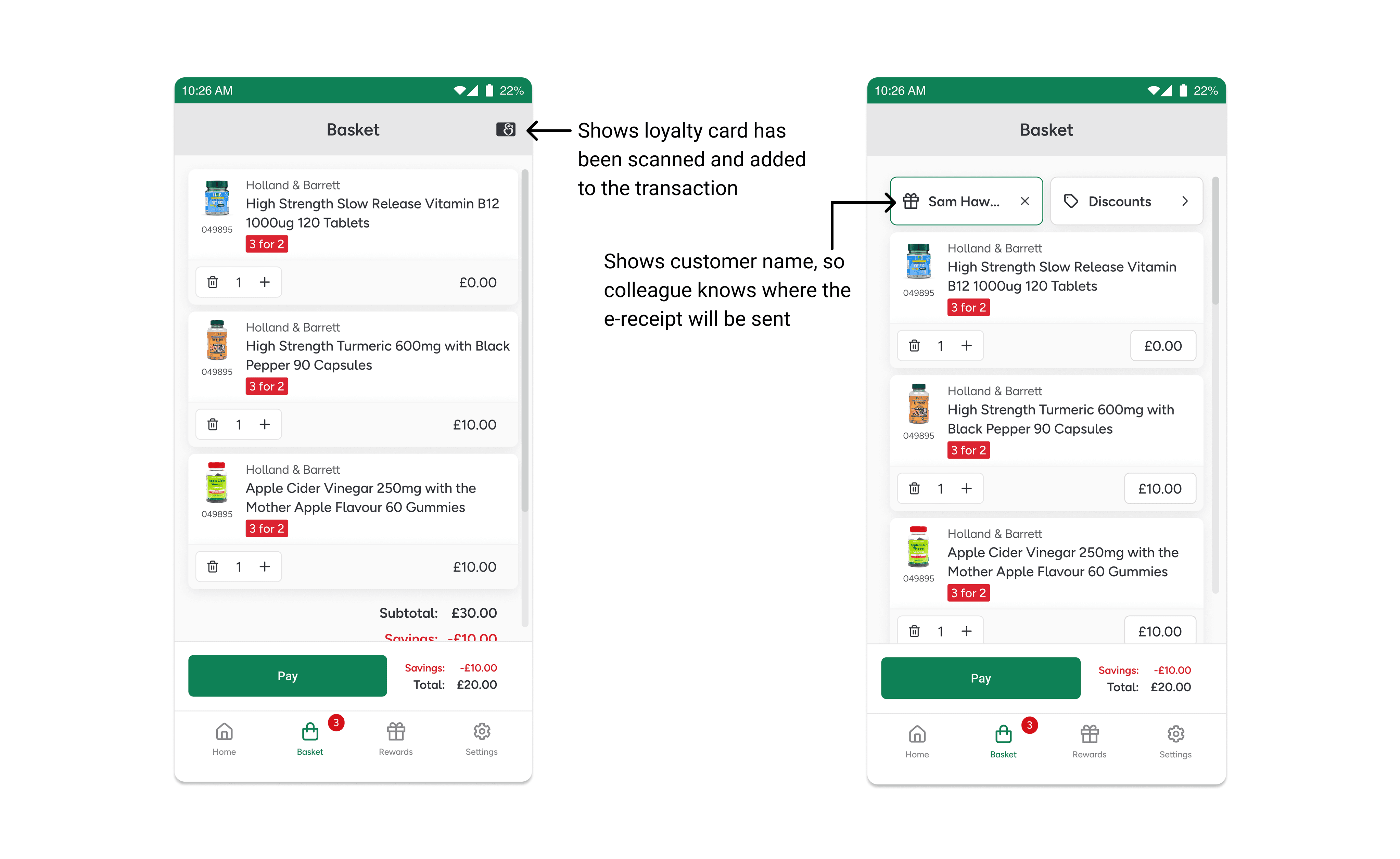
↑ A small design change that made a big impact.
Overcoming Constraints
Existing hardware was unable to take payments - the retail team sourced a new device to use for this project, but it was mobile size - all existing designs for this app were bespoke for tablet screen size.
The new designs had to be responsive to tablet and mobile.
Another hardware constraint was that we could not print receipts - new printers could not be purchased and the existing tech stack did not allow to connect to the till printers.
We were able to use e-receipts, but the constraint was that they were only available to customers that were signed up to the loyalty scheme - meaning the loyalty sign-up flow had to be added to the roadmap.
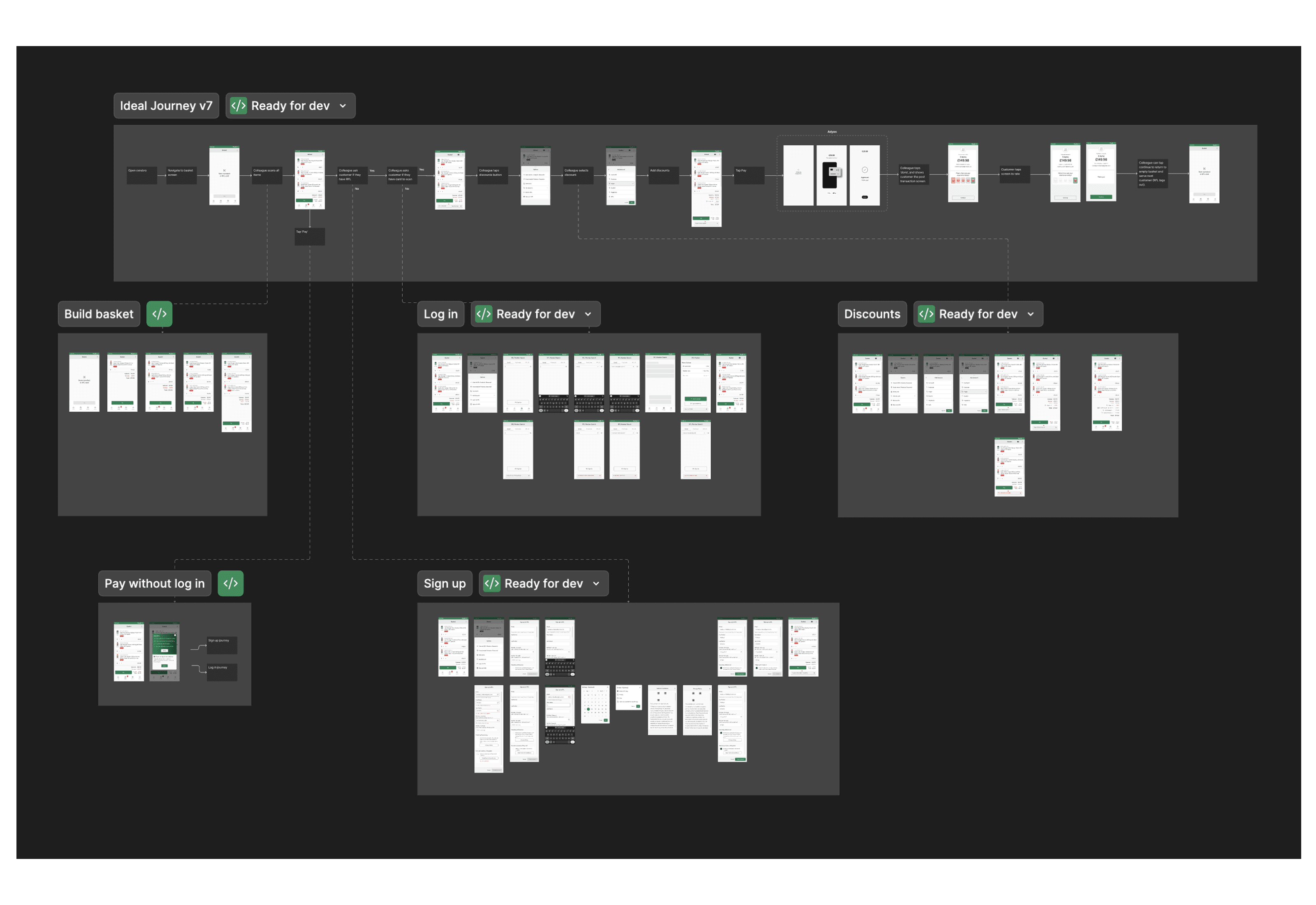
↑ Some key flows: including loyalty sign up. Also checkout, log in and adding vouchers.
Outcomes & Impact
The mobile checkout experience was piloted across 20 stores over a 4-week trial, delivering measurable performance improvements:
•
25% increase in Average Order Value (AOV) compared to standard tills – from £14.50 to £18.01
•
Slight increase in items per basket (from 2.70 to 2.74) — suggesting more opportunities for upselling at the shelf edge
•
+1% increase in loyalty signups and +1% increase in marketing opt-ins — helping strengthen customer profiles for future engagement
•
Aside from the metric, qualitative feedback from the in-store colleagues was also very positive - they highlighted another benefit of being able to 'queue bust' - reduce long queues during busy periods in the day.
•
Helped contribute towards an improved CSAT score from 83.9 (9th place) to 85.4 (6th place) as of July 2025. With CEO Anthony Houghton crediting the personalised, detailed wellness consultation that is only possible through the colleagues use of the Cerebro app. [source]
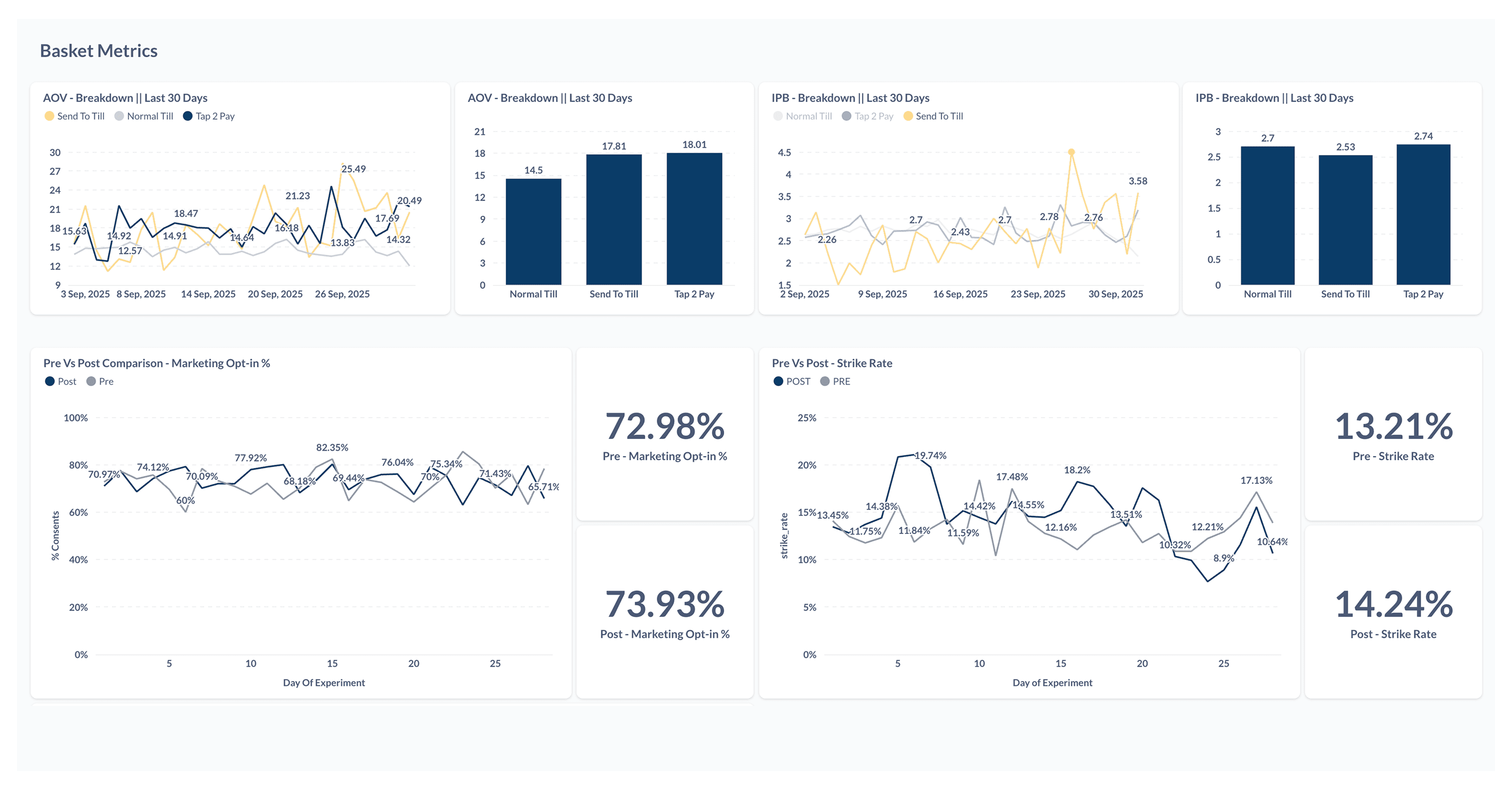
↑ Worked with the data team to extract key metrics
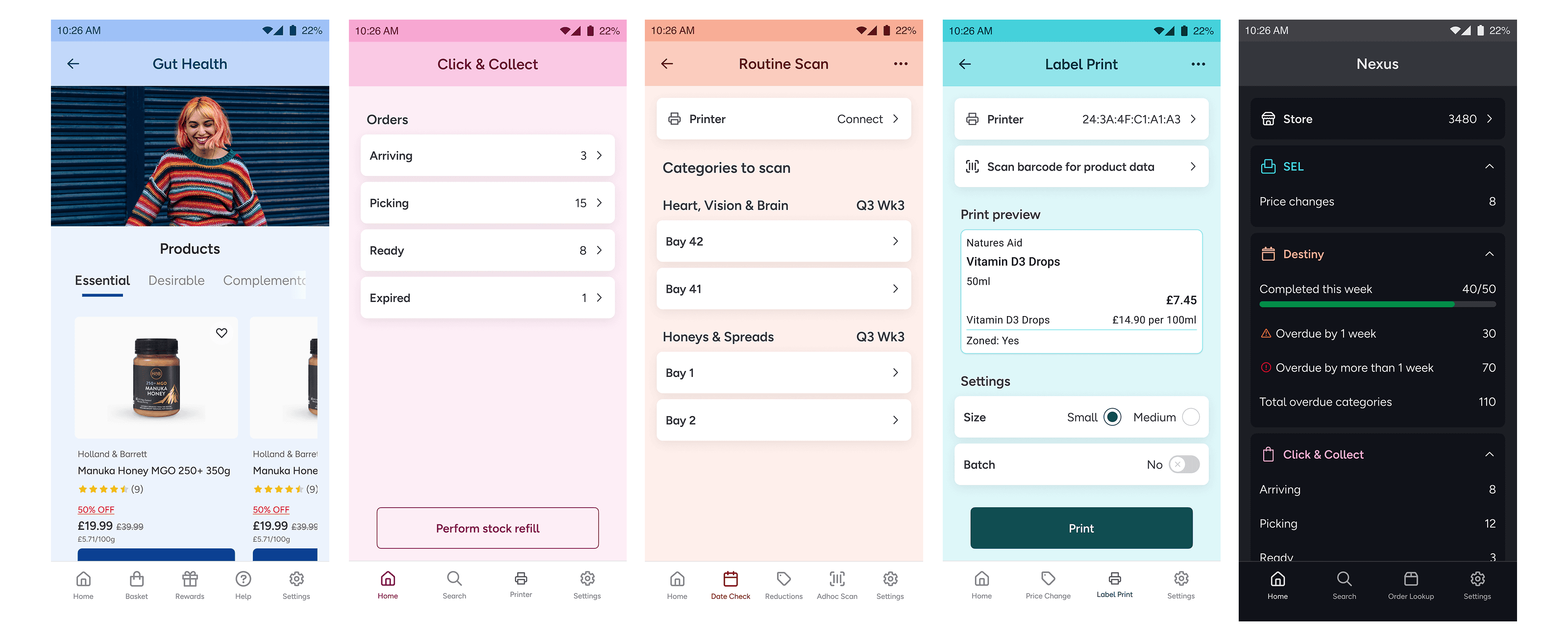
↑ The retail app eco-system