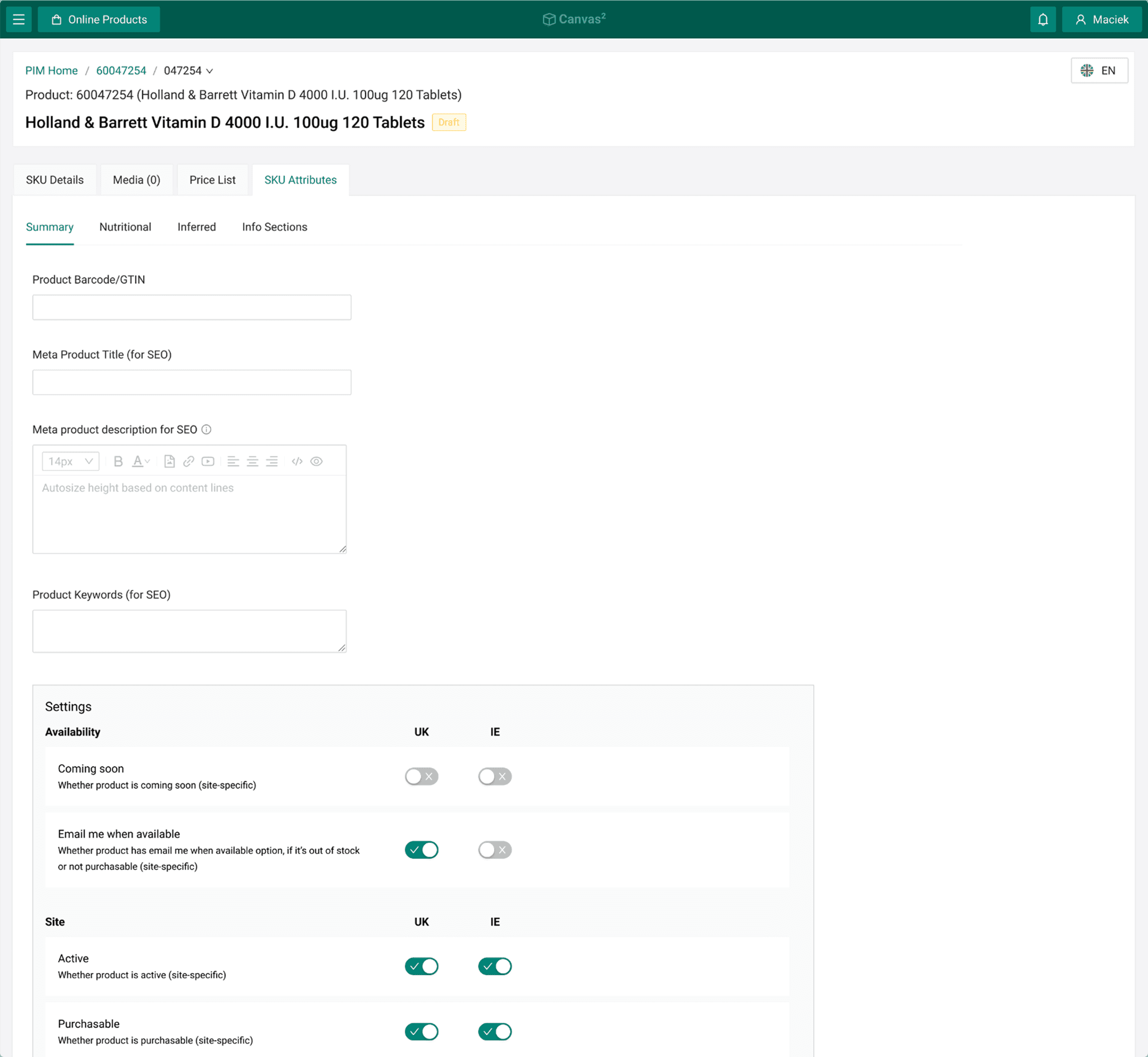
Information System
Designing a bespoke product information system to replace third-party tools and reduce ongoing operational costs.
A custom internal platform to centralize product data and empower merchandisers with fast, reliable workflows - replacing fragmented tools that hampered speed, accuracy, and collaboration.
The Challenge
Before this project, product information lived across several off-the-shelf systems, leading to:
Data inconsistencies across teams
High administrative burden on merchandisers
Slow updates and duplicated effort
These inefficiencies directly impacted operational velocity and decision-making, with teams spending hours each week just maintaining product records.
My Role
As Lead UX Designer, I collaborated closely with the product manager, master data squad, and engineering to define and deliver an intuitive, scalable interface that fits real user workflows. (Food and UX)
Responsibilities included:
User research & needs validation
User flows, wireframes & high-fi screens
Interface design aligned with the enterprise design system
Iterative prototype testing with merchandisers
Understanding Users & Their Workflow
Through weekly cross-functional workshops and direct sessions with merchandisers, we uncovered:
Redundant systems causing repeated data entry
Friction in updating product attributes and metadata
Lack of a single “source of truth” with real-time accuracy
Mapping these pain points informed core task flows and screen prioritisation.
Design Process
1. Define core user journeys
We outlined essential tasks for merchandisers — from creating product records to updating variants — then sketched flows that minimized clicks and cognitive load.
2. Wireframes & interface system alignment
Screens were built within the enterprise design system to ensure consistency with the wider product ecosystem.
3. Rapid prototyping & validation
Interactive prototypes were tested with actual users, validating assumptions and uncovering opportunities to improve labelling, hierarchy, and task efficiency.
4. Iteration based on feedback loops
Weekly demos with stakeholders ensured alignment, and feedback from merchandising teams helped refine details like error handling and bulk edit logic.
Outcomes & Impact
The bespoke Product Information System fundamentally transformed how teams manage data:
•
£40,000/month saved by eliminating third-party tools
•
50% faster product updates, saving merchandisers ~8 hours/week
•
Consistent, accurate product data across teams
These results demonstrate how a user-centered approach can drive real operational efficiencies and measurable business impact.
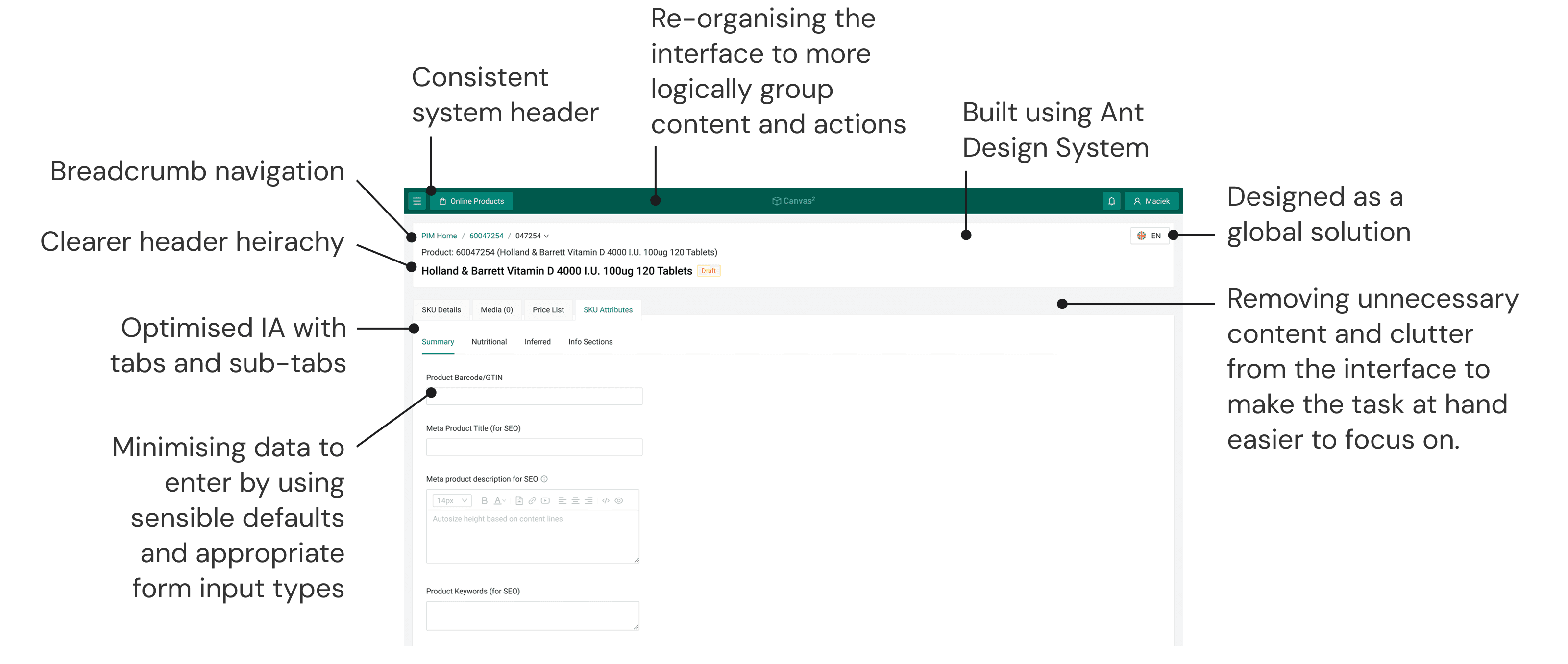
↑ Optimising the system layout.